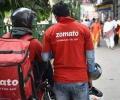
Investors are increasingly turning optimistic about shares of new-age companies. From broad-based 'sell' calls, analysts are giving thumbs up to Zomato, Paytm, and FSN e-Commerce Ventures-owned Nykaa as these companies have shifted focus to sustainable profits. The shares of Zomato hit a fresh 52-week high of Rs 126 apiece on the BSE on November 7, having rallied 15.4 per cent in one week.

Hero MotoCorp (HMCL) saw strong volume performance in the first quarter of the current financial year (Q1FY25), but margins disappointed due to weak spare part sales and negative electric vehicle (EV) margins. The company hopes for a strong festive season due to better rural sentiment. Revenue grew 16 per cent year-on-year (Y-o-Y) to Rs 10,140 crore, operating profit was up 21 per cent to Rs 1,460 crore, and adjusted net profit grew 19 per cent Y-o-Y to Rs 1,120 crore.

Bajaj Auto reported steady results in Q1FY25, with revenue surging 16 per cent year-on-year (Y-o-Y), operating profit registering a growth of 24 per cent Y-o-Y, and margins swelling 20.2 per cent. The profitability was aided by 50 basis points (bps) on the accrual of PLI benefits. The domestic prospects for two-wheelers are healthy, though the response to the newly launched CNG motorcycle is a key monitorable.

Housing sales in seven major cities rose 5 per cent annually to about 1.2 lakh units during the April-June period, while demand fell 8 per cent from the preceding quarter on surge in prices, according to Anarock. Real estate consultant Anarock, which is one of the leading housing brokerage firm, on Thursday released the data of housing market for the current April-June quarter. In April-June 2024, housing sales across seven major cities are estimated at 120,340 units, up 5 per cent from 115,090 units in the year-ago period.

The first quarter earnings season will dictate the trend in the equity markets in this holiday-shortened week amid absence of major macroeconomic drivers, say analysts. Besides, lacklustre global markets may increase volatility in the market, they added. Equity markets would remain closed on Wednesday for Bakri-Id.

During the September quarter (Q2FY25), Hindustan Zinc's (HZL's) revenue was reported at Rs 8,300 crore (up 22 per cent year-on-year or Y-o-Y, and 2 per cent quarter-on-quarter or Q-o-Q), marginally above consensus. Operating profit stood at Rs 4,100 crore (up 31 per cent Y-o-Y and 5 per cent Q-o-Q), also a small beat. The operating profit margin was 50 per cent, up from 48.5 per cent in Q1FY25.
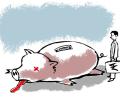
Most lenders that have reported their April-June business update posted slower growth in deposits sequentially as compared to the loan growth in the April-June quarter of 2024-25 (FY25). Current and savings account (CASA) deposits continue to face pressure. Private-sector lenders YES Bank, Bandhan Bank, and RBL Bank saw their deposit growth contract by 0.5 per cent, 1.5 per cent, and 2 per cent, respectively.
Telecom major Bharti Airtel on Wednesday said its net profit dipped nearly 28 per cent to Rs 1,215.2 crore (Rs 12.15 billion) in the quarter ended June 30, 2011.

The combined net profit of "early bird" companies, those that have declared their quarterly results, rose for the third consecutive quarter in July-September 2023 (Q2FY24). But the figures suggest a continued slowdown in revenue growth and stagnation in earnings over recent quarters. This slowdown is severe for companies in the manufacturing and non-financial service sectors.

Bengaluru-based Infosys has announced that 80 per cent of the variable pay will be distributed to eligible employees for the quarter ending June 30, according to media reports. This amount will be included with the August month's salary. In contrast, Infosys had paid out 60 per cent of the variable pay in the fourth quarter of financial year FY23.

The Street shrugged off a muted first quarter of financial year 2023-24 (Q1FY24) and a cautious near-term outlook by India's largest information technology (IT) services company, Tata Consultancy Services (TCS). The stock was the top Nifty50 and Sensex gainer on Thursday, rising 2.5 per cent, as investors took comfort from a robust order book and an encouraging pipeline. Like its larger peer, HCL Technologies' (HCL Tech), too fell short of the Street's expectations on the revenue and margin fronts given cuts in discretionary expenditure.

Tata group company and IT major Tata Consultancy Services (TCS), on Friday said that it has clocked a net profit of Rs 1,534 crore (Rs 15.34 billion) in Q1 FY 10, up 19 per cent as compared to the year-ago period of Rs 1,290.61 crore (Rs 12.90 billion).

States are on track of fiscal consolidation with their total borrowings reaching Rs 5 trillion till October, which is 60 per cent of the projected borrowings of Rs 8.38 trillion till December 2024, according to data from official sources. Government officials said the lower-than-projected borrowings by states were a sign of prudent fiscal management by them. States announce their borrowing plans every quarter.

In calendar year 2024, the stock price of Trent has zoomed 160% As compared to the 18% rally in the BSE Sensex during the same period. It has outperformed the market in the past 10 consecutive years.

Shriram Finance's (SHFL's) profit after tax (PAT) rose 10 per cent year-on-year (Y-o-Y) to Rs 2,140 crore in the fourth quarter of the financial year 2024-25 (Q4FY25).
Anil Ambani Dhirubhai Group company Reliance Capital Ltd on Tuesday posted over a three-fold rise in net profit after tax at Rs 94.53 crore (Rs 945.3 million) for the quarter ended June 30.

Reliance Jio, India's biggest telecom operator, is planning to launch an initial public offering (IPO) and listing on bourses in the first half of 2026, billionaire Mukesh Ambani said on Friday. Jio is currently a unit of Reliance Industries Ltd, India's most valuable company.

'Advanced skills is such a broad spectrum that a simple prompt engineer to a critical upper end LLM developer are clubbed under one.' 'In addition, some include their non-technical employees who can use AI tools under this talent base.'
The June quarter is usually considered as a seasonally strong period for the IT sector.

Net profit of 19 listed banks is likely to decline by 4 per cent year-on-year (Y-o-Y) for the quarter ended March (Q4FY25) mainly due to pressure on net interest margins (NIM) as a result of rate cut by the Reserve Bank of India (RBI), according to analysts' estimates. Additionally, loan growth is expected to further slowdown amid low demand in certain secured products, stress in the unsecured segment, and a high cost to deposit (CD) ratio across the system.

State-run Indian Oil Corporation (IOCL) reported a weak performance in the fourth quarter of FY24 (January-March 2024), and the turmoil in the energy market indicates it could endure another lacklustre quarter. The oil marketing company (OMC) reported an Ebitda of Rs 10,400 crore, down 27 per cent year-on-year (Y-o-Y) due to weak reported gross refining margin (GRM) of $8.4 per barrel in Q4FY24, which was almost half the consensus expectation of $15 per barrel.

IT services major Infosys on Wednesday posted a 22.7 per cent rise in net profit to Rs 5,195 crore for the April-June quarter of 2021-22, and raised its revenue growth outlook for the full fiscal. The Bengaluru-based company's net profit (after minority interest) was at Rs 4,233 crore in April-June 2020. Its revenue from operations grew 17.8 per cent to Rs 27,896 crore in the first quarter of FY22 from Rs 23,665 crore in the year-ago period, Infosys said in a regulatory filing.

IT major Infosys Ltd on Thursday reported a 7 per cent rise in first quarter net profit and raised its growth outlook for the current financial year. The consolidated net profit of Infosys increased to Rs 6,368 crore in the April-June quarter, compared to Rs 5,945 crore in the same period a year back, according to a stock exchange filing by the company.

Even if the Reserve Bank of India's Monetary Policy Committee decided to hold interest rates in the October meeting, it acknowledged the scope for further rate cuts while waiting for the impact of the past steps to play out.

After the hit of the pandemic, India Inc is now worried about the adverse impact of inflation and higher commodity prices on their revenues and margins. The inflation scare is the strongest among manufacturers of consumer goods such as automobiles, consumer durables, and fast-moving capital goods (FMCG). Companies across sectors fear they will not be able to pass on the hike in input costs to their consumers due to weak demand, which, in turn, would lead to a hit on margins and profitability in the forthcoming quarters.

Ola Electric is conducting an restructuring exercise which is expected to affect over 500 employees across various roles within the organisation, according to sources. This would be over 12 per cent of staff at the firm which has about 4,000 people. "This is a restructuring exercise ongoing for the last few months and is expected to conclude by next month," said a person familiar with the development.

Margins for the oil refining and retailing sector have moved off their peaks, and the average integrated margins (refining plus marketing) for oil marketing companies (OMCs) have normalised. The ascent in crude oil prices, combined with static retail prices, has depressed marketing margins for diesel and petrol. However, the fall in marketing margins has been offset by increased gross refining margins (GRMs).
Private sector banking major, ICICI Bank has clocked a net profit of Rs 620.01 crore (Rs 6.2 billion) in Q1 FY 07 as against Rs 530.01 crore (Rs 5.3 billion)

'While lower steel prices may impact a part of the quarter, this will be offset by softer raw material prices.'

Grasim Industries has announced a rights issue of around Rs 4,000 crore with the promoters committed to fully subscribing to their entitlements and to covering any unsubscribed portion. This is to part-fund capital expenditure (capex) of Rs 10,000 crore in a new foray into the paints business. The company has already invested Rs 3,640 crore in the paints business (by Q1FY24). The management has outlined a capex of Rs 5,700 crore for FY24, which includes Rs 4,280 crore allocated for the paints business, of which Rs 1,050 crore has already been spent in Q1FY24.

India's largest cable and wire manufacturer Polycab India ended financial year 2024-25 (FY25) on a high, delivering another strong quarter of double-digit growth and market share gains. This coupled with margin expansion, operating breakeven for its fast-moving electrical goods (FMEG) business, and steady exports outlook for FY26 is expected to support the stock, which is up 18 per cent over the past month. The stock is currently trading at Rs 5,765 a share.

Consolidated earnings for oil-to-telecom conglomerate Reliance Industries (RIL) may report sequential weakness, and modest year-on-year (Y-o-Y) growth in the June 2024 quarter (Q1FY25), said analysts. Lower refining margins are expected to moderate gains made from other businesses. RIL is slated to report its financial performance for Q1FY25 on July 19.
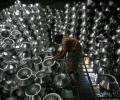
Hindalco's first quarter (Q1FY23) results indicate healthy domestic volumes for aluminium and copper, and lower cost of production. Subsidiary Novelis saw weak volume trends but it managed to push operating profit margins on a better mix and pricing hikes. The weak global outlook on aluminium is a cause for ongoing concern.

Asset Management Companies (AMCs) demonstrated improved business metrics in the first quarter ended June 2023 (Q1FY24), but a sharp run-up in stocks leaves little room for further upside in the immediate term, say analysts. During this quarter, HDFC AMC reported a 10 per cent year-on-year (YoY) rise in revenue from operations at Rs 575 crore. Nippon India's revenue from operations went up 12 per cent to Rs 354 crore.
Indian Oil Corporation (IOC), Bharat Petroleum and Hindustan Petroleum may post a combined loss of Rs 10,700 crore in June quarter on selling petrol and diesel at rates below cost, a report said on Monday. While the raw material (crude oil) prices soared in April-June, petrol and diesel prices were not revised, leading to marketing losses which offset strong refining margins, ICICI Securities said in the report. The three state-owned oil marketing companies -- IOC, BPCL and HPCL -- control 90 per cent of the retail petrol and diesel sales in the country.

In August, the Reserve Bank of India Governor Shaktikanta Das held a meeting with chief executive officers/ managing directors (CEOs/ MDs) of large non-banking financial corporations (NBFCs). The discussions included diversifying borrowing sources for NBFCs and housing finance companies (HFCs) to contain increasing reliance on bank borrowing, risks associated with high credit growth in retail segment in unsecured loans, prioritising IT upgrades and cyber-security, improving provisioning, monitoring of stressed exposures and slippages, ensuring robust liquidity and asset-liability management, ensuring transparency in pricing, creating robust grievance redress mechanisms.

Cement companies witnessed speculative support from investors through FY23 amid hopes of a rebound. After capex announcements in the FY24 Budget, there was further interest due to expectations that government expenditure would boost earnings, besides a generic macro-recovery. Cement earnings were under pressure in FY22 and FY23 due to high raw material and fuel costs; muted demand prevented them passing on the higher cost.

Maruti Suzuki India (MSIL) has ambitious plans to increase capacity. It is also seeking shareholders' approval for a complex swap transaction, which would acquire Suzuki Motor Gujarat (SMG), a subsidiary of Suzuki Motor Corporation (SMC) through a preferential offer. SMC already holds 56.37 per cent of MSIL's equity.

Share prices of Nestle India, Asian Paints, Bandhan Bank, Tata Technologies, AU Small Finance Bank and Avenue Supermarts, all a part of the BSE 500 index, have hit their respective 52-week lows on the BSE in Thursday's intra-day trade after a sharp correction in the equity markets.

The markets have given a thumbs down to Jubilant FoodWorks results for the April-June quarter (Q1) of 2023-24 (FY24). The company, which owns and operates Domino's Pizza and Popeyes chain of stores, reported a (standalone) net profit of Rs 75.2 crore in Q1 of FY24 - a drop of 25.5 per cent year-on-year (YoY) from Rs 101 crore, but a quarter-on-quarter (QoQ) rise from Rs 47.5 crore. What's worrying the Street is the likelihood of a dismal Q2FY24 performance, which it feels will be marred by soaring milk, cheese and vegetable prices.
